
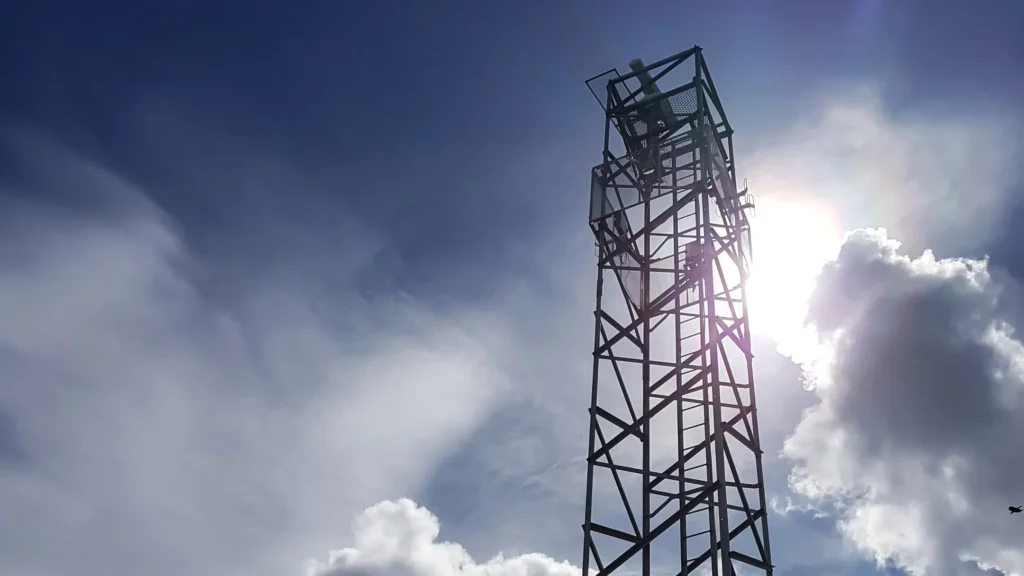
EVEARLYS, le système de détection de la foudre par interférométrie UHF de SELERYS, capte plus de 99 % de l'activité orageuse totale au sein d'une cellule orageuse.
SELERYS‘ interféromètre de détection de la foudre EVEARLYS mesure l’activité électrique naissante au sein d’une cellule orageuse bien avant qu’un détecteur de foudre basse fréquence standard ou qu’un radar pluviométrique classique ne puisse l’enregistrer. EVEARLYS exploite l’interférométrie UHF, une technique qui localise précisément l’origine d’un signal d’éclair en comparant ses temps d’arrivée sur plusieurs panneaux d’antennes. Notre interféromètre détecte aussi bien les éclairs intranuageux que les coups de foudre nuage-sol. Ce flux alimente directement CIRRUS, permettant aux exploitants d’anticiper le moment précis où un orage s’apprête à devenir violent. Chantiers et exploitations minières, aéroports, bases de lancement spatiales, opérateurs de télécommunications et d’énergie, programmes d’ensemencement des nuages ou organisateurs d’événements en extérieur s’appuient sur cet avis de tempête pour intervenir bien avant le premier coup de foudre.
EVEARLYS en un coup d'œil :
- Détecte plus de 99 % de l'activité orageuse totale sur la zone de couverture, combinant éclairs intranuageux, nuage-nuage et coups de foudre nuage-sol
- Détecte le risque de foudroiement bien avant le premier éclair nuage-sol, dépassant ainsi largement les capteurs basse fréquence (nuage-sol) classiques.
- Mesure la montée en charge électrique d'une cellule orageuse avant que le nuage ne soit assez dense pour un radar pluviométrique standard
- Fonctionne en synergie avec le radar SKYDETECT ou tout radar en bande X, complétant d'une analyse d'activité électrique la cellule orageuse déjà repérée au radar (la technologie couplant l'interférométrie aux radars en bande X est brevetée par SELERYS)
- Envoie des alertes automatiques par SMS, e-mail ou message vocal dès le franchissement d'un seuil météorologique
- Requiert seulement quatre panneaux légers par installation, connectés par GSM, ADSL ou satellite
Cas d'utilisation d'EVEARLYS par secteur
L’avis de tempête délivré par EVEARLYS ne concerne pas uniquement les secteurs météo-dépendants. Toute activité où la foudre peut interrompre un équipement, mettre en danger une équipe ou imposer une évacuation gagne à connaître l’imminence d’une aggravation orageuse. Cela couvre un large éventail d’infrastructures, des aéroports et bases de lancement spatiales (à l’image des références du Centre Spatial Guyanais du CNES à Kourou) aux chantiers et zones d’ensemencement des nuages, chacun appliquant une consigne adaptée à la même alerte.
Secteurs d’utilisation d’EVEARLYS
- Les aéroports et les bases de lancement spatiales s’appuient sur l’avis de foudre d’EVEARLYS pour suspendre les opérations au sol ou interrompre un compte à rebours de lancement jusqu’à l’évacuation de la cellule orageuse.
- Les équipes de chantier disposent d’un délai accru pour sécuriser le site et évacuer les structures métalliques exposées avant l’orage.
- En ensemencement des nuages, EVEARLYS guide le déclenchement des ballons et drones LAICO de SELERYS selon la maturité de la cellule orageuse ciblée.
- Les installations énergétiques, telles que les centrales solaires et les sous-stations électriques, utilisent cet avis de tempête pour prévenir des arrêts d’exploitation de plusieurs heures causés par un impact unique.
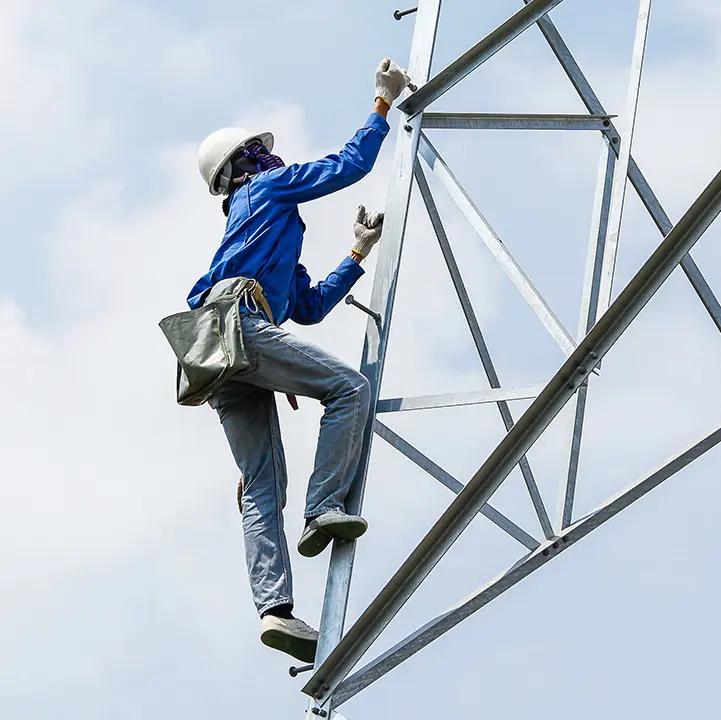
- Les techniciens de télécommunications reçoivent un préavis pour sécuriser le matériel sur pylône exposé, tandis que les sites miniers (notamment à ciel ouvert) replient leurs équipes et engins hors des zones vulnérables avant que les conditions ne deviennent critiques.
- Les organisateurs d’événements et de loisirs en plein air s’appuient sur les avertissements d’EVEARLYS pour entamer l’évacuation du public, lors d’un festival de musique par exemple, tant que les conditions restent sûres.
Détection de l'activité orageuse totale et intégration à SKYDETECT
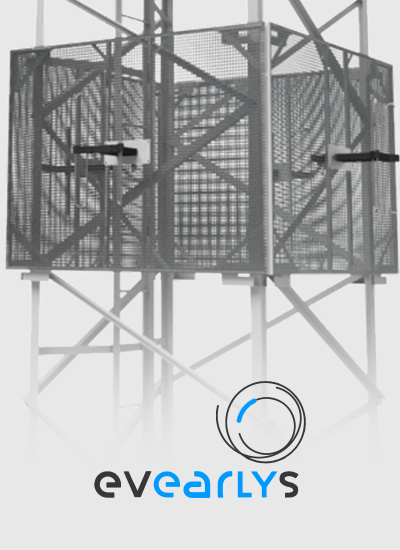
EVEARLYS analyse l’activité électrique d’une cellule orageuse par interférométrie UHF, confrontant la réception du signal électromagnétique sur quatre panneaux d’antennes distincts pour localiser son point d’origine dans le nuage. Ce dispositif assure à EVEARLYS un taux de détection supérieur à 99 % de l’activité orageuse totale sur sa zone de couverture, englobant les coups de foudre nuage-sol et les éclairs intranuageux sans contact avec le sol.
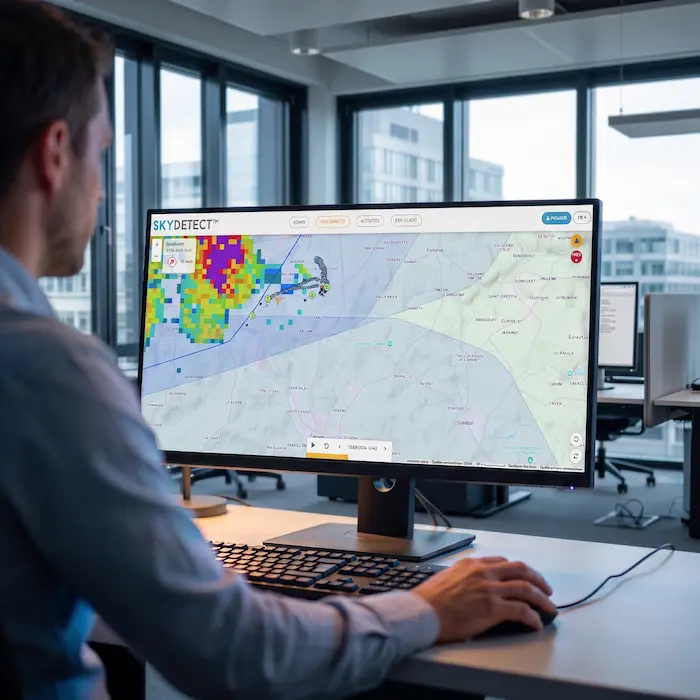
Dès que SKYDETECT a identifié une cellule orageuse en formation, EVEARLYS mesure son activité électrique pour en déterminer le stade d’évolution ; les deux systèmes posent conjointement le diagnostic de l’orage. Le gain de rapidité d’EVEARLYS s’illustre particulièrement face à un radar pluviométrique classique : il intercepte la charge électrique du nuage bien avant que sa densité n’apparaisse sur un radar conventionnel ou sur un détecteur basse fréquence classique (nuage-sol).
Performances de détection d’EVEARLYS
- Taux de détection de l’activité orageuse totale supérieur à 99 %, intranuageux et nuage-sol combinés
- Diagnostic conjoint de la cellule orageuse avec SKYDETECT dès son repérage par le radar
- EVEARLYS capte 10 000 fois plus de sources d’éclairs que tout autre capteur opérationnel du marché
- Interférométrie VHF/UHF reconnue par les agences météorologiques et spatiales, dont la NASA et EUMETSAT
- Protégé par 3 brevets (architecture, couplage avec radar en bande X, couplage avec le traitement des données ToA pour une cartographie complète et inédite de la foudre totale)
Alertes automatiques et télésurveillance
EVEARLYS exécute son propre algorithme d’évaluation des risques, comparant l’activité électrique aux seuils définis par l’exploitant. L’évaluation s’opérant en continu, EVEARLYS émet une alerte dès le dépassement d’un seuil pour avertir le responsable désigné, même éloigné de son poste.
Les exploitants surveillent et pilotent EVEARLYS à distance depuis smartphone, tablette ou ordinateur. Le système s’interface directement avec CIRRUS, le logiciel de gestion météorologique de SELERYS, aux côtés du radar SKYDETECT ou de la flotte de vecteurs d’ensemencement des nuages (ballons et drones LAICO), offrant une vue unifiée des risques météo du site.
CIRRUS conserve également un historique interrogeable des données enregistrées par EVEARLYS (un an d’activité ou plus classé par date), permettant de réexaminer chaque épisode orageux antérieur. La gestion des accès s’effectue par profils d’utilisateurs distincts pour les techniciens de terrain, les opérateurs en salle de contrôle et la direction.
Fonctionnalités d’alerte et de surveillance
- Seuils sur mesure évalués en continu face à l’activité électrique en direct
- Alertes automatiques transmises par SMS, e-mail ou appel vocal dès le franchissement d’un seuil
- Accès et administration à distance depuis tout smartphone, tablette ou ordinateur
- Intégration directe avec CIRRUS, SKYDETECT et la gestion de flotte des ballons et drones LAICO
Spécifications techniques
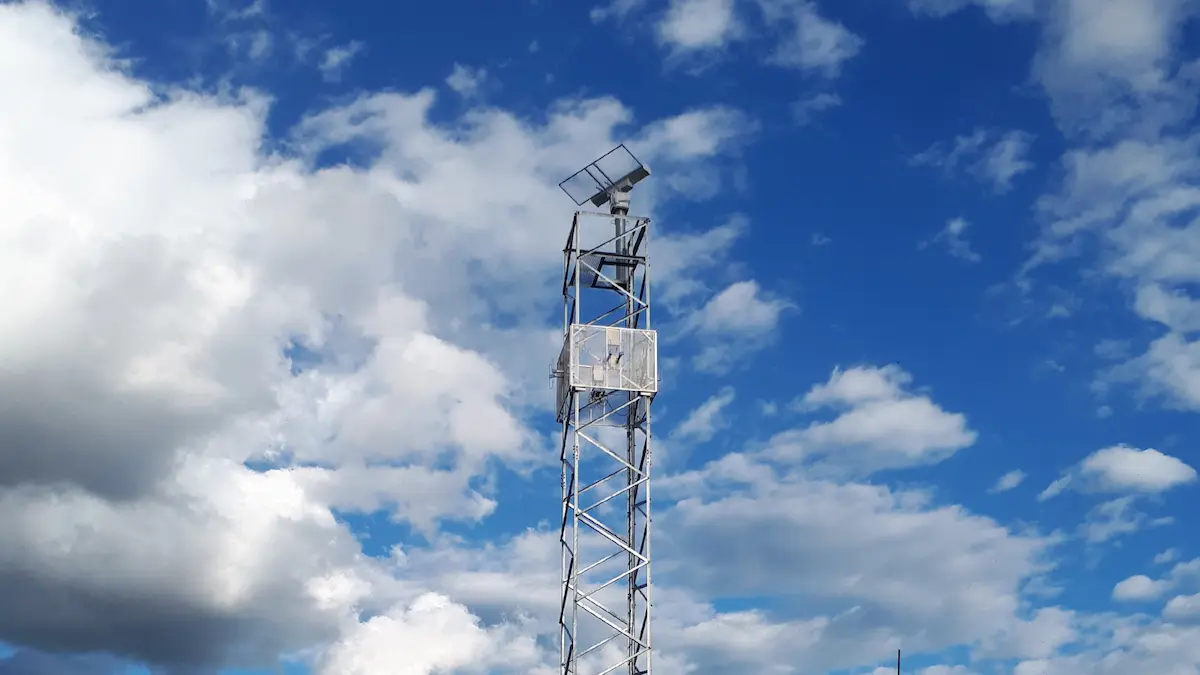
EVEARLYS dispose d’un seuil d’acquisition de -97 dBm et d’une résolution temporelle de traitement de 10 microsecondes, maintenus dans la durée grâce à une veille continue de la bande UHF et à des procédures d’étalonnage manuelles et automatiques.
Lors de la formation d’un orage, l’activité électrique peut s’intensifier en quelques secondes. L’association d’une sensibilité élevée aux signaux faibles et d’un traitement à l’échelle de la microseconde permet à EVEARLYS d’analyser ce pic en temps réel et de diffuser l’alerte dès la survenue des premières impulsions.
EVEARLYS en chiffres
- Capacité de détection : 99 % de l’activité orageuse totale captée, intranuageux et nuage-sol combinés
- EVEARLYS détecte 10 000 fois plus de sources d’éclairs que tout autre capteur opérationnel du marché
- Seuil d’acquisition : -97 dBm, garantissant la réception des signaux radio les plus faibles
- Résolution de traitement : 10 microsecondes
- Caractéristiques d’installation : 4 panneaux de 1,3 m x 1 m et 7 kg chacun, avec un champ de vision de 180° par panneau
- Alimentation sans interruption : 4 heures minimum, assurant la continuité de détection en cas de coupure secteur
- Brevets internationaux : 3 brevets (architecture, couplage avec radar en bande X, couplage avec le traitement des données ToA pour une cartographie complète et inédite de la foudre totale)
Installation du système EVEARLYS
Toute implantation d’EVEARLYS débute par une étude de site. SELERYS s’assure que chacun des quatre panneaux dispose d’un dégagement visuel de 180° vers le ciel, vérifie les accès électriques et sélectionne le mode de transmission adapté (GSM, ADSL ou satellite). SELERYS procède au montage des équipements une fois ces prérequis validés, la télésurveillance s’exécutant ensuite de manière transparente quelle que soit la connectivité retenue.
EVEARLYS peut également être couplé directement au radar SKYDETECT sur le même mât, réunissant détection de foudre et surveillance atmosphérique au sein d’une installation unique. Cette configuration regroupe les flux des deux instruments sur le même tableau de bord CIRRUS, évitant aux exploitants de basculer entre deux outils distincts pour apprécier le risque orageux.
L’essentiel de l’installation
- Étude préalable garantissant un champ de vision dégagé de 180° pour chacun des quatre panneaux
- Quatre panneaux légers par installation, de 1,3 m x 1 m et 7 kg chacun
- Raccordement par GSM, ADSL ou satellite selon les contraintes du site
- Couplage direct possible avec le radar SKYDETECT sur le même site
EVEARLYS et SKYDETECT : différences entre les deux systèmes
| Catégorie | EVEARLYS | SKYDETECT |
|---|---|---|
| Méthode de détection | Interférométrie UHF, analyse de l'activité électrique d'une cellule orageuse | Radar en bande X (antenne 6 kW), mesure de la réflectivité du nuage |
| Données restituées | Degré d'activité électrique de la cellule orageuse | Positionnement et déplacement de la cellule orageuse |
| Couverture | Quatre panneaux, 180° de champ de vision chacun, 360° au total | Rayon de 30 km, demi-sphère complète |
| Installation | Étude de site, quatre panneaux légers | Étude de site, déploiement en une seule journée sur tour, mât ou toiture |
| Alimentation de secours | Alimentation sans interruption d'au moins 4 heures | Alimentation autonome optionnelle pour sites isolés |
| Point fort | Détection de l'activité électrique avant que le nuage ne soit assez dense pour le radar pluviométrique | Suivi en temps réel de la position et de la trajectoire d'une cellule orageuse |
Ces deux systèmes ne sont pas interchangeables. Une exploitation qui s’en remet uniquement à la réflectivité radar peut ignorer la montée en charge électrique d’un orage, tandis qu’un site surveillant exclusivement la foudre ne disposera d’aucune information sur la localisation exacte de la cellule ni sur sa direction de déplacement.
Foire aux questions
Pourquoi EVEARLYS mesure-t-il l'activité orageuse totale plutôt que les seuls coups de foudre nuage-sol ?
Les éclairs intranuageux, cette activité électrique interne qui n’atteint jamais le sol, représentent 90 % de l’activité orageuse totale et se développent généralement bien avant le premier éclair nuage-sol ou les premières pluies d’un orage. Un dispositif limité aux seuls impacts au sol ignore ce signal précurseur ; c’est la détection de l’activité orageuse totale qui confère à EVEARLYS son délai d’anticipation déterminant face à l’orage. Chaque minute compte.
EVEARLYS nécessite-t-il une installation SKYDETECT pour fonctionner ?
Non. EVEARLYS détecte la foudre et émet ses alertes de manière autonome ; la présence de SKYDETECT n’est en rien obligatoire. Le couplage des deux instruments sur un même site reste optionnel et apporte une double analyse foudre et radar au sein de la même cellule orageuse.
En quoi EVEARLYS se différencie-t-il des autres détecteurs de foudre du marché ?
À la différence de la plupart des réseaux industriels de détection reposant sur des capteurs basse fréquence (LF) ou haute fréquence (HF), EVEARLYS utilise l’interférométrie UHF, une architecture brevetée par SELERYS. Il se positionne comme le seul système industriel d’interférométrie UHF commercialisé à ce jour. Notre solution détecte et suit 10 000 fois plus de sources d’éclairs que toute autre solution industrielle du marché.
Quelle est l'expertise de SELERYS en matière de détection d'orages et de foudre ?
L’équipe de SELERYS réunit plusieurs décennies de recherche et une autorité scientifique reconnue dans la détection de la foudre et l’observation atmosphérique. Avec de nombreux déploiements opérationnels sur plusieurs continents, nos ingénieurs ont éprouvé leur savoir-faire dans des environnements exigeants à travers le monde, proposant des solutions fiables et dimensionnées pour chaque défi météorologique.
Que se passe-t-il si EVEARLYS subit une coupure d'alimentation ?
Une alimentation sans interruption intégrée maintient le fonctionnement d’EVEARLYS pendant au moins 4 heures en totale autonomie. Cette sécurité est essentielle car un orage violent est précisément le type d’événement susceptible d’endommager le réseau électrique local, au moment où la surveillance devient critique.
EVEARLYS est-il réservé aux seules opérations d'ensemencement des nuages ?
Non. L’ensemencement des nuages constitue l’un des multiples domaines d’application d’EVEARLYS, aux côtés des aéroports, des centres spatiaux et sites de lancement, des chantiers, de l’énergie, des télécommunications, des mines ou des manifestations culturelles et sportives. Tout site où la détection anticipée de la foudre conditionne la sécurité ou la continuité d’activité tire parti de l’interféromètre de SELERYS, qu’il mène ou non des actions d’ensemencement.
prenez contact avec notre équipe
pour identifier la solution la plus adaptée à vos besoins