
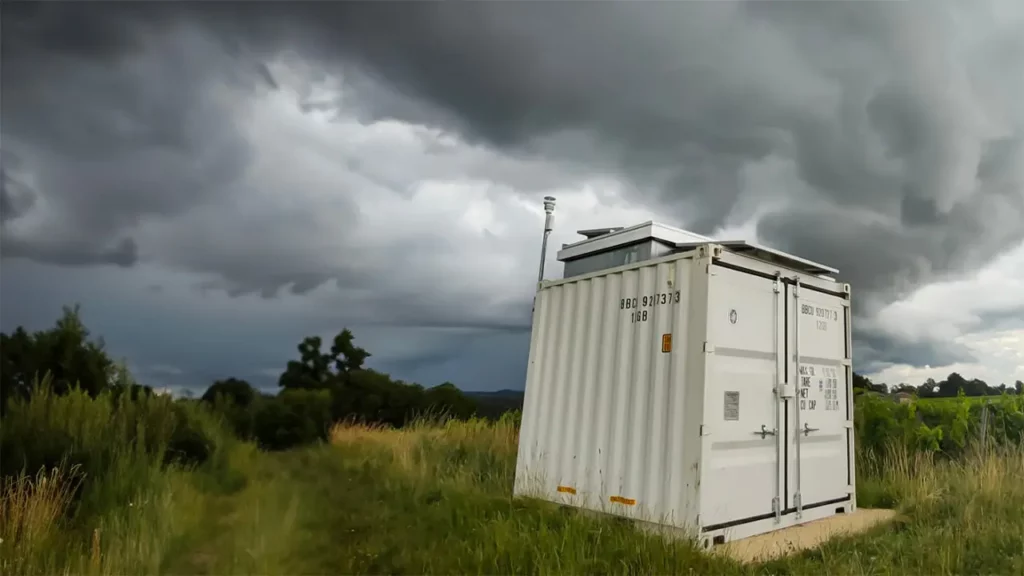
LAICO Smart DRONE cloud seeding platform
LAICO Smart DRONE is a cloud seeding solution by SELERYS that fits any drone airframe: fixed-wing, rotary-wing, VTOL, or multicopter. Most of our missions use rotary-wing and multicopter drones, which can maintain the optimal cloud-seeding speed of 5 m/s for hygroscopic salts, even in wind gusts up to 15 m/s.
A cloud-seeding drone by SELERYS can launch within 5 to 15 minutes with a single SMS or web command.
LAICO Smart DRONE system at a glance
- A single dedicated Mission Manager for the whole drone fleet.
- Remote launch using an SMS or a web interface.
- Autonomous pre-flight security and flare-connection checks.
- Flight plans updated dynamically as conditions change.
- A 5 m/s hovering seeding speed, with a 15 m/s wind-gust ceiling.
- Real-time GPS and atmospheric data, plus flare inventory, sent to CIRRUS.
Choosing between a cloud seeding drone and a balloon
The choice comes down to four factors: cloud type, qualified staff, local aviation rules, and seeding strategy. Unlike a fixed SOBLI launch station, a drone can be moved to any mission site. However, in many countries, a drone needs clearance before every flight, while a balloon doesn’t. Balloons are therefore the default for large territories, vineyards, orchards, mines, and ski areas, and SELERYS can pair both within one program.
Advantages of drones
- Suitability for stable cloud systems.
- Capacity to work as a drone squad covering one area.
- Adaptability to terrain through a choice of platforms.
- Autonomous route-following, overseen by the SELERYS Mission Manager.
- Integration with existing programs using balloons, planes, rockets, or ground generators.
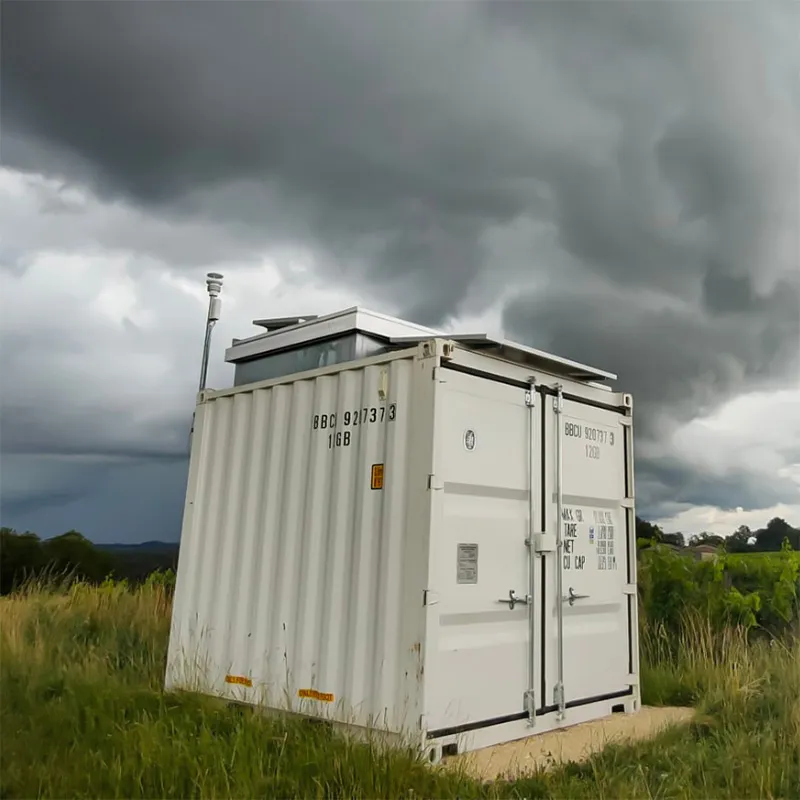
Coverage, flexibility, and efficiency
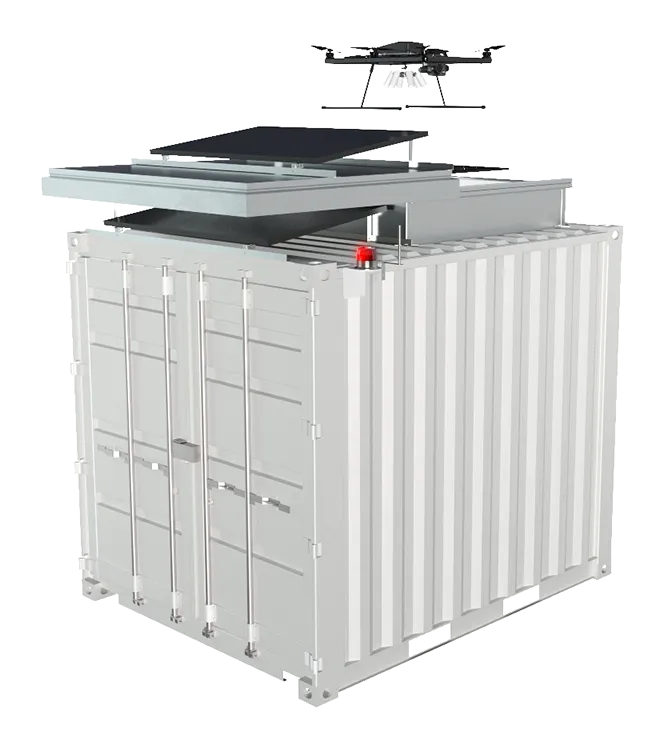
The SELERYS Mission Manager can run continuous, multi-target seeding, sending each drone on a set route to its own target and adding drones as coverage grows. A drone can take up to 15 minutes to reach its target, vs. under 5 minutes for a balloon, but it still responds far faster than a manned aircraft. In addition, carrying several flares allows a drone to perform longer cloud-seeding missions.
Coverage and efficiency at a glance
- Scalable coverage, as you can add more drones to the same LAICO launch installation.
- Automatic platform choice, route planning, and release timing for each mission.
- Drone squads able to seed several clouds.
- Single CIRRUS dashboard for drones, balloons, radar, and interferometer data.
Safety and regulatory profile
A cloud-seeding drone runs on batteries that need regular replacement, depending on flight frequency. Each flare is checked before launch and activated autonomously by the drone’s onboard intelligence once it reaches its target. Together with LAICO balloons, this makes LAICO Smart DRONE the safest drone-based cloud seeding solution available. Drone missions fall under a specific regulatory framework, just like manned aircraft.
Safety and regulatory highlights
- Clearance: licensed operator sign-off, as with manned aircraft, before every mission.
- Weather limits: cannot operate in darkness, turbulence, or icing.
- Time to target: 5 to 15 minutes, clearance included, vs. hours for manned aircraft.
- Seeding agent: silver iodide or hygroscopic salt.
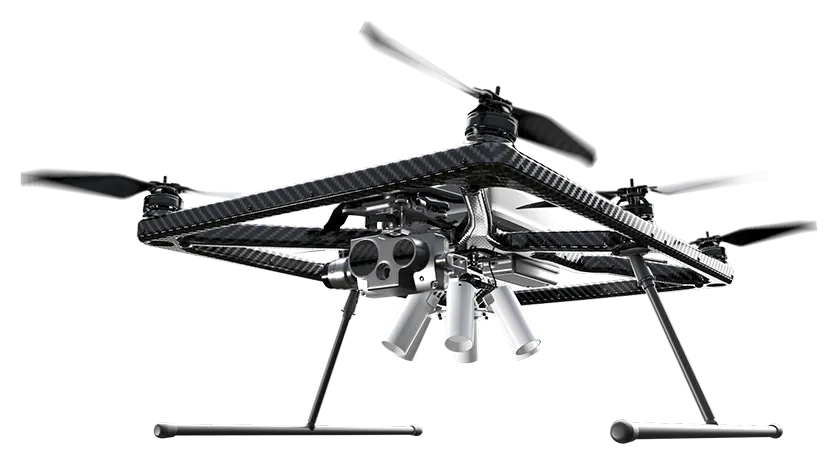
LAICO Smart DRONE use cases
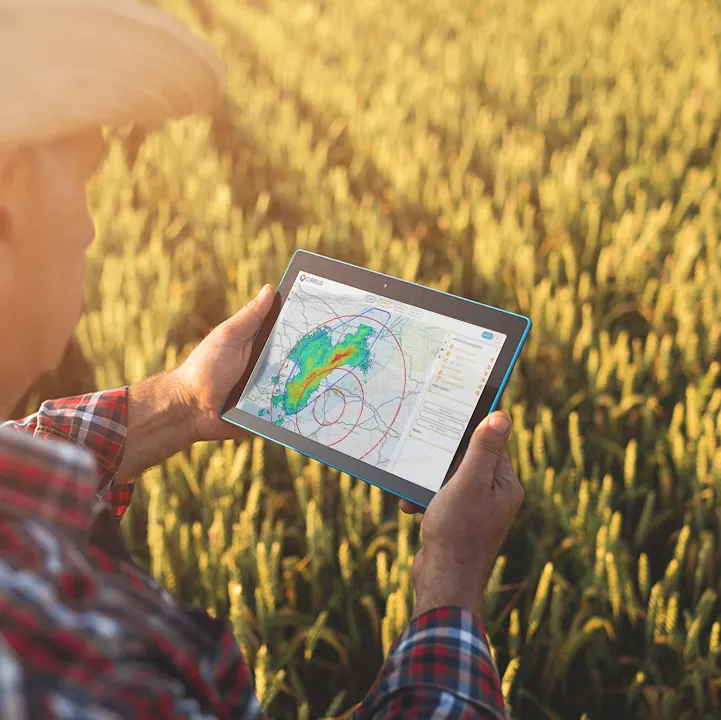
All SELERYS services – hail risk mitigation, rain and snow enhancement, and fog dispersal – rely on the same LAICO launch stations for balloons and drones. Drones are called in for seeding stable cloud systems, or when a mission is large enough to combine both methods.
Where LAICO Smart DRONE can be used
- Hail risk mitigation: drones seeding a forming hail cell, alone or in a group.
- Rain enhancement: added precipitation over farmland, reservoirs, and hydropower catchments.
- Snow enhancement: cold-cloud seeding for a denser snowpack at ski areas and water utilities.
- Fog dispersal: multi-drone deployments clearing a larger fog bank.
Comparing drone types for cloud seeding
Not every airframe suits cloud seeding equally. The SELERYS engineering doctrine scores each platform on hovering at the right speed, deploying fast, and holding steady in wind. Most LAICO Smart DRONE missions use rotary-wing or multicopter drones for hovering and stability.
Platform trade-offs
- Fixed-wing and VTOL: longer range, but no hovering at 5 m/s.
- Fixed-wing and VTOL: unable to approach cumulonimbus turbulence, where hail missions operate.
- Rotary-wing and multicopter: shorter range, but steady hovering in turbulence.
- 5 m/s: optimal dispersal speed, per an independent study.
- Manned aircraft: fly much faster, breaking agent particles down too small.
| Feature | Fixed-Wing | VTOL | Rotary-Wing | Multicopter |
|---|---|---|---|---|
| Autonomy (1+ hour) | ✓ | ✓ | ✓ | ✕ |
| Range (6+ km) | ✓ | ✓ | ✓ | ✕ |
| Top speed (80+ km/h) | ✓ | ✓ | ✓ | ✓ |
| Hovers at 5 m/s seeding speed | ✕ | ✕ | ✓ | ✓ |
| Vertical take-off | ✕ | ✓ | ✓ | ✓ |
| Payload capacity | ✓ | ✕ | ✓ | ✓ |
| Take-off infrastructure | ✕ | ✕ | ✓ | ✓ |
| Deployment speed | ✕ | ✕ | ✕ | ✓ |
| Maneuverability | ✕ | ✕ | ✓ | ✓ |
| Wind resistance (15+ m/s) | ✕ | ✕ | ✓ | ✓ |
| Ease of maintenance | ✕ | ✕ | ✕ | ✓ |
| Cost | ✕ | ✕ | ✕ | ✓ |
Frequently asked questions
What is LAICO Smart DRONE?
LAICO Smart DRONE is SELERYS’s drone-based cloud seeding system. The dedicated SELERYS Mission Manager operates the drone platform assigned to each mission fully autonomously, most often a rotary-wing or a multicopter.
Why does SELERYS support several drone platforms instead of one?
It depends on the mission: the terrain, how much space there is to land and take off, and what the local crew can maintain. Rotary-wing platforms, the most common choice, can reach seeding speeds of 5 m/s and handle wind gusts up to 15 m/s without drifting.
Does LAICO Smart DRONE need an operator?
Yes, if local regulations require it. Otherwise, the full mission can run autonomously. Where required, a licensed operator and flight clearance are needed before every mission, unlike LAICO balloons, which launch under a Full Freedom to Operate agreement (a specific protocol set up with the local civil aviation authority).
How fast can LAICO Smart DRONE reach its target?
Once cleared, CIRRUS software handles platform selection, the flight plan, and release timing, and guides the drone to its target in 5 to 15 minutes. A balloon can reach the cloud cell faster because it skips the systematic clearance step. A manned aircraft, with its hours of preparation, cannot compare with drones or balloons for cloud seeding.
When does SELERYS use a drone instead of a balloon?
A designated territory that needs repeated cloud seeding every season, such as a vineyard, favors balloons, as they need no operator and launch automatically within minutes. Conversely, a moving target, or a mission that has to move from one seeding target to the next, could sometimes favor a drone, provided the target clouds are stable. SELERYS can deploy both together when needed.
Can SELERYS fly more than one drone at a time?
Yes. Each drone handles a specific target, and SELERYS can send several out at once to divide a larger area among them.
What seeding agents does LAICO Smart DRONE carry?
Each drone carries several flares loaded with silver iodide (AgI) or hygroscopic salt, just like the SELERYS balloon fleet.
Does LAICO Smart DRONE work with SELERYS's other systems?
Yes. The drone streams its GPS position and atmospheric data to the CIRRUS software dashboard throughout the flight so that the operator can track every mission from one interface alongside SKYDETECT radar and EVEARLYS interferometer data.
get in touch with our team
and find the best response to your needs