
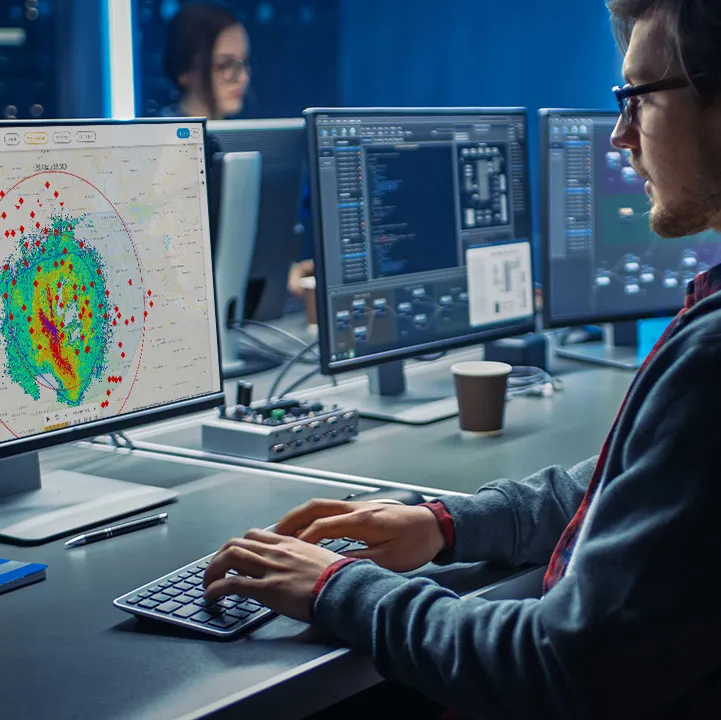
X-band radar for early warning of storms and hail
SKYDETECT, SELERYS’s atmospheric monitoring radar, scans the half-sphere of sky above a site in high definition every minute. It uses 20 years of storm data to warn of severe storms and hail up to 60 minutes ahead. Designed to protect crops, equipment, and people – from vineyards to solar farms and even remote islands.
SKYDETECT at a glance:
- Maps cumulative maximum reflectivity in HD, cloud by cloud
- Proprietary algorithms distinguish storm threats from regular clouds
- Brings local radar coverage to islands and isolated sites for far less than a conventional radar
- Can run entirely off-grid on optional solar panels and batteries
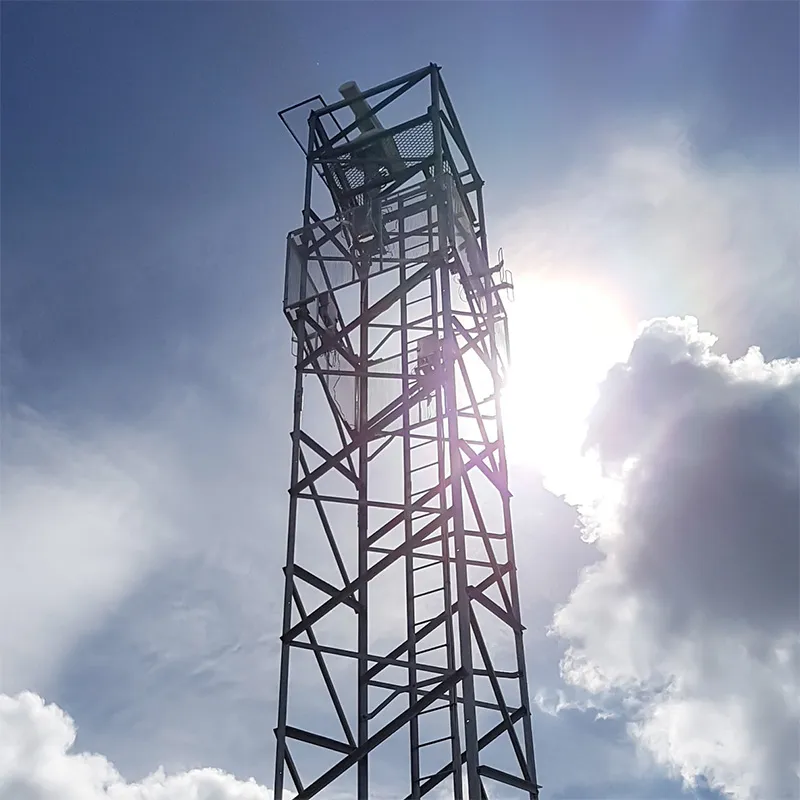
- Mounts in a day on an existing structure, or on a mobile trailer for short-notice or short-term coverage
- Covers a 30 km radius per unit, alone or as part of a radar network
- Watches the sky 24/7/365 and sends custom automatic alerts by SMS, email, or voice call
SELERYS storm radar use cases by industry
Top use cases for the SKYDETECT radar by SELERYS include islands and remote territories, agriculture, automotive logistics, solar energy farms, airports, construction and energy sites, telecom infrastructure, and mining operations, as well as outdoor events that draw crowds.
SKYDETECT is the first layer of SELERYS’s storm early warning system. It detects developing storm cells on radar, alongside EVEARLYS’s analysis of electrical activity, and supports our cloud-seeding missions using LAICO smart balloons and smart drones.
Where SKYDETECT is used:
- Islands, Archipelagos & Remote Sites: Territories that national radar networks do not cover get high-definition storm and flash-flood warnings, with no multi-million-euro installation required.
- Agriculture & Viticulture: Growers of vineyards, orchards, and other high-value crops have up to 60 minutes to close hail nets and start anti-hail action.
- Automotive Logistics & Storage Hubs: Vehicle compounds and dealership yards can put cars under cover or fit protective covers before the storm hits.
- Solar & Energy Farms: Photovoltaic plants tilt their panel trackers into a “hail-stow” position automatically, or start hail mitigation. Substations run their lightning protection procedures.
- Airports: Advanced cell tracking tells ground controllers and operations managers when to pause ramp operations, fuel handling, and aircraft turnarounds.
- Construction & Mining Sites: Automated alerts reach crews on exposed cranes and in open pits and quarries, so high-risk work (including slippery conditions) stops, and people get to safety.
- Telecommunications: Tower operators get early warning to protect exposed transmission equipment.
- Outdoor Events & Stadiums: Organizers get the radar lead time they need to pause a concert or clear a stadium, and to get a large crowd into shelter.
- Cloud-Seeding Operations: SELERYS and institutional weather modification programs read SKYDETECT’s live reflectivity data to pick seedable cells, then reach them with precision balloons or drones.
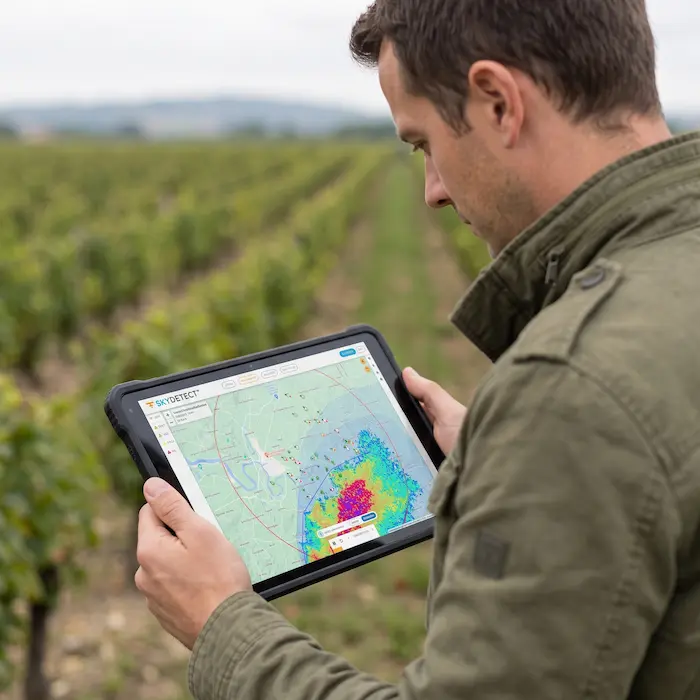
How hail risk anticipation protects assets
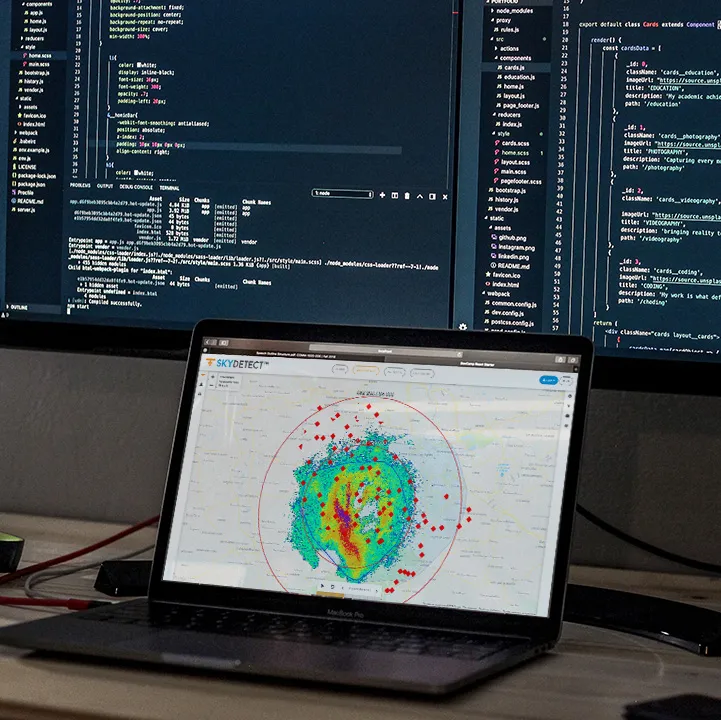
Conventional weather services watch rain that is already falling. SKYDETECT™ looks at the cloud’s internal microphysics while it’s still growing. High-definition 3D volume scanning and SELERYS’s proprietary Probability of Hail (POH) algorithms detect the onset of hail formation up to 60 minutes before a hailstorm begins.
With that lead time, teams protect assets before the hail arrives and do not have to count the damage afterward:
- Photovoltaic & Solar Farms: Operators switch trackers to a steep-tilt “hail-stow” position, which reduces the impact angle and kinetic force of falling hailstones, or they request targeted hail suppression.
- Automotive Parks & Logistics: Distribution hubs and car manufacturers can move high-value vehicles off exposed lots and cover the rest.
- Viticulture & Agriculture: Vineyard managers, orchard growers, and agricultural cooperatives close hail netting and switch on anti-hail defenses (such as SELERYS cloud-seeding vectors) while there is still time.
- Industrial & Logistics Sites: Facility managers get sufficient warning to close motorized roof vents and move outdoor equipment and staff under cover.
Storm cell detection and tracking
Once installed, a SKYDETECT unit operates 24/7, watching the sky up to 30 km away to identify all developing storms. The radar measures each cloud’s maximum reflectivity in high definition and updates it every 60 seconds, unlike conventional weather radars, which update their readings only every few minutes. SKYDETECT also draws on SELERYS’s in-house algorithms and two decades of proprietary storm records.
The radar itself is a lightweight 6 kW X-band antenna linked to an outdoor or indoor cabinet. It can operate as a standalone unit to protect a single location or as a set of networked units to cover a larger territory. Low power consumption and an autonomous power supply give SKYDETECT full energy independence, making it ideal for remote installations and island environments.
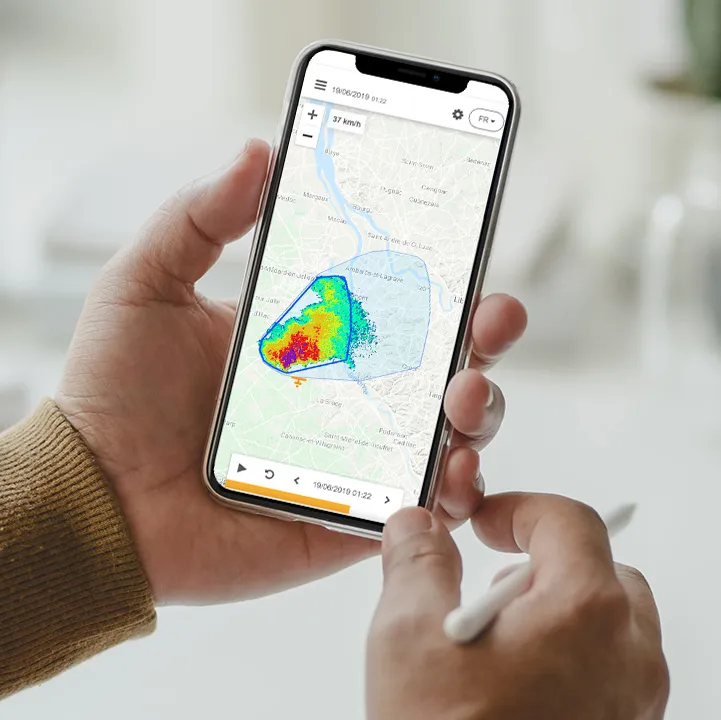
Patented dual-sensor capability: why SKYDETECT works best with the EVEARLYS interferometer
For mission-critical sites requiring the highest level of severe weather and hail anticipation, SKYDETECT™ can be coupled with SELERYS’s EVEARLYS™ VHF/UHF lightning detection interferometer — an exclusive sensor fusion protected by SELERYS patents.
SKYDETECT follows cloud reflectivity and hail core dynamics every 60 seconds. EVEARLYS follows the electrical activity inside the cloud, with over 99% detection efficiency. A sharp spike in total lightning is a recognized precursor (via the lightning jump algorithm) to lightning strikes, sudden updraft intensification, and imminent heavy rain or hail.
By correlating high-definition X-band radar reflectivity with interferometric lightning mapping inside CIRRUS, operators get access to the earliest and most reliable multi-threat warning system on the market.
Key advantages of using SKYDETECT and EVEARLYS in combination:
- Patented sensor coupling: SELERYS holds the exclusive patents on combining X-band radar with interferometry
- Total Lightning mapping: Maps intra-cloud and cloud-to-ground electrical activity, a method NASA and EUMETSAT recommend for early storm tracking
- Maximum anticipation: Compares how the cloud core develops with the lightning jumps inside the cloud, which gives decision-makers more lead time
- Unified operational view: Live data from both sensors appears on one interactive map in CIRRUS
Network deployment and operation for SKYDETECT radar
Every SKYDETECT radar installation is a ready-to-operate, turnkey solution: it includes the radar hardware, a full software suite, a user-friendly interface with multi-user management, remote monitoring tools, and ongoing maintenance and support.
A SKYDETECT unit can be installed in just 24 hours, after which SELERYS keeps the network running by checking equipment health, quickly resolving faults, and training the client’s staff for full operational independence. When a site needs urgent or temporary radar coverage, our team can bring in a mobile mast-mounted trailer.
Clients can monitor and control the network live through CIRRUS, SELERYS’s weather management software, from any device, anywhere. We monitor every SKYDETECT unit installation worldwide around the clock through our centralized IT infrastructure, allowing our engineering team to diagnose and resolve many issues remotely.
SKYDETECT network deployment step by step:
- A site survey before installation, checking power supply, sightlines, and access
- Installation of a standalone SKYDETECT unit, or a network of units across a wider territory
- Live monitoring through CIRRUS, with the status of every sensor visible at any time, from any device
- Round-the-clock automated fault detection, with remote troubleshooting in most cases
- Training for on-site staff, building toward full independent operation
Short-range X-band radar vs. conventional long-range weather radar
SKYDETECT’s shorter 30-km range is a technological advantage: networks of small, short-range radars placed closer together ensure a constant view of the low layer of the atmosphere that gives rise to severe weather. By contrast, single long-range radars have a well-documented limitation: their beams can overshoot that low layer, because a radar beam’s height above the ground increases with distance from the antenna. SKYDETECT refreshes its reading every minute, against an average volume-scan cycle of 4 to 6 minutes for a traditional long-range radar. That faster cadence adds lead time to every storm warning.
| Factor | SKYDETECT (Short-Range X-Band) | Conventional Long-Range Radar |
|---|---|---|
| Scan refresh rate | Once every minute in HD | Roughly every 4 to 6 minutes per volume scan |
| Low-level coverage | Short range keeps the beam low enough to see the near-ground layer where severe weather develops | Beam height grows with distance from a single site and may pass above the lowest layer |
| Coverage per unit | 30 km radius; deployed standalone or networked across a territory | Up to roughly 230 km for precipitation estimates, farther for general storm detection |
| Installation & Infrastructure | Lightweight; mounts on existing infrastructure within one day | Massive civil engineering, heavy towers, and complex dedicated infrastructure |
| Cost & Remote/Island Readiness | Highly cost-effective; runs 100% off-grid with optional solar/battery power and satellite connectivity | Budget of several million euros with continuous heavy grid power; financially inaccessible for islands |
| Best suited for | Site-level protection for agriculture, solar farms, vehicle lots, airports, and isolated islands | Broad, macro-scale regional or national weather surveillance |
Frequently asked questions
What is SKYDETECT, and what does it detect?
SKYDETECT is SELERYS’s short-range X-band radar, built to scan the clouds in the atmosphere and anticipate severe weather. It scans the full half-sphere above a site once a minute in HD and provides each cloud’s cumulative maximum reflectivity to analyze how storm cells behave and develop.
How does SKYDETECT tell a real storm apart from a harmless cloud?
The radar analyzes its readings using SELERYS’s proprietary algorithms and a storm database built from 20 years of our company’s data. With SKYDETECT, a dense-looking cloud won’t trigger a false threat alert.
Can SKYDETECT anticipate hail, and how does it protect vulnerable assets like crops, vehicle compounds, or solar panels?
Yes. While a conventional weather radar can see rain only after it starts falling, SKYDETECT can look inside the cloud during its formation stage. And thanks to SELERYS’s hail-probability (POH) algorithms, it can give teams up to 60 minutes of warning before hail reaches the ground. That is enough time for solar farms to tilt their trackers, for vehicle compounds to cover or relocate inventory, and for agricultural estates to put up protective nets or start their anti-hail systems.
Why is SKYDETECT particularly suited for islands, archipelagos, and isolated sites?
A standard weather radar needs heavy civil engineering, a large power supply, and a budget in the millions of euros, so many islands and remote sites have no coverage. SKYDETECT is a turnkey system built around a light 6 kW antenna. It can be deployed in 24 hours, run off its own power source without the grid, connect via satellite or cellular, and deliver high-definition local storm warnings at a fraction of the cost of a traditional radar station.
Does SKYDETECT need EVEARLYS or CIRRUS to work?
No, SKYDETECT operates completely autonomously as a standalone sensor. However, pairing it with the EVEARLYS™ lightning interferometer unlocks an exclusive, patent-protected combination of the two sensors. SELERYS holds patents on pairing interferometry with X-band radar. While SKYDETECT tracks physical cloud structures, EVEARLYS detects intra-cloud electrical precursors and “lightning jumps”. CIRRUS unifies both feeds into a single real-time decision dashboard.
How long does a SKYDETECT installation take?
A single unit takes just one day to install on an existing tower, mast, or building. For urgent or temporary needs, a trailer fitted with a mobile mast is also available.
Which industries use SKYDETECT?
Agriculture and viticulture lean on it for crop protection and hail mitigation. Solar and energy plants use it for hail-stow automation and lightning safety, and automotive logistics hubs for open-air vehicle storage. Island and archipelago communities, airports, construction and mining sites, telecom operators, outdoor events, and cloud-seeding programs are also important use cases.
What happens to a SKYDETECT unit if it loses grid power or an internet connection?
SELERYS remote radar installations can run on an optional autonomous power supply (solar/battery). In addition, SELERYS monitors every unit it deploys remotely from our central IT systems, including automatic fault detection and remote diagnosis — no regular site visits required.
How experienced is SELERYS in building storm detection technology?
SELERYS has deployed storm detection radars since 2006, and hundreds of them are in service today. Across all its products, SELERYS has over a thousand systems worldwide as of 2026, built and supported by a team of more than 30 engineers and PhDs.
get in touch with our team
and find the best response to your weather modification needs