

Fog dispersion programs by SELERYS restore visibility when fog grounds flights and halts work at mines or infrastructure sites.
Our LAICO cloud-seeding balloons and drones can clear the fog layer fast, saving operators money and improving safety and schedule reliability.
Advantages of fog dispersion by SELERYS
- Target sites: airports, seaports, mining operations, road corridors, and energy or construction sites that have to work in fog-prone conditions
- Cutting-edge methods: LAICO SOBLI balloons and LAICO drones release the seeding agent directly into the fog layer at low altitude; balloons need no separate flight authorization, while drones fly under the authorization required for each mission
- Flexibility: smart cloud-seeding balloons or drones, as required by the mission
- Monitoring: CIRRUS software tracks atmospheric conditions throughout the operation, adjusting the program as the fog bank clears
- Validation: every fog dispersion program is measured against real visibility readings taken at the site, before and after treatment
Top use cases for fog dispersion
Fog dispersion is necessary wherever reduced visibility leads to lost work hours or increased safety risks:
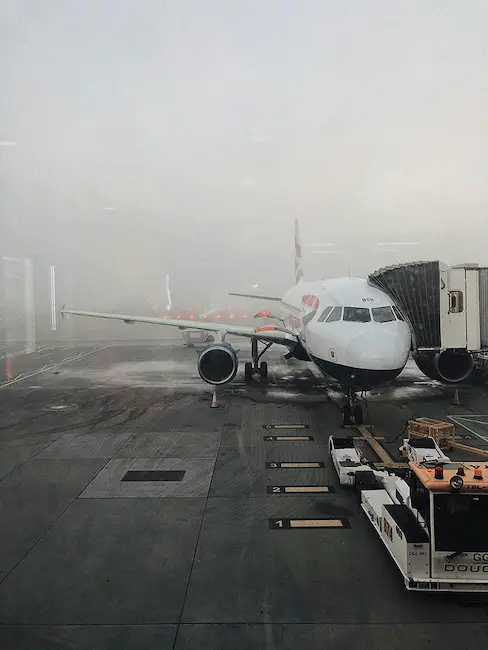
- Airports: better visibility reduces the risk of accidents and delays in aviation. Fog makes taxiing between the gate and the runway particularly difficult (rather than takeoff or landing itself). A closed runway can trigger a cascade of delayed departures, and ground stops that last long after the fog lifts.
- Maritime ports and shipping lanes: the same visibility risk applies to maritime transport as to air transport. If a harbor pilot cannot see the channel markers, they hold vessels at anchor rather than risk a grounding, and every hour that a berth remains empty costs the port and the shipping companies money.
- Mining operations: fog reduces efficiency and safety at mining sites, especially open-pit sites, where haul trucks and blasting schedules depend on clear sightlines. If fog settles into a pit at dawn, it can delay the whole shift.
- Road corridors: fog often causes accidents on low-lying or coastal roads.
- Construction sites: high moisture turns ladders, scaffolding, and ground surfaces into a slip hazard. Crane operators must pause work because they can’t see riggers’ hand signals, and concrete doesn’t cure as expected, adding delays.
- Energy installations: fog affects solar power stations, which lose generation when they don’t receive direct sunlight. Fog also impacts thermal and nuclear plants, because cooling towers lose efficiency. Finally, charged droplets in fog near transmission lines can, under certain conditions, contribute to insulator flashovers.
How SELERYS clears fog with cloud seeding
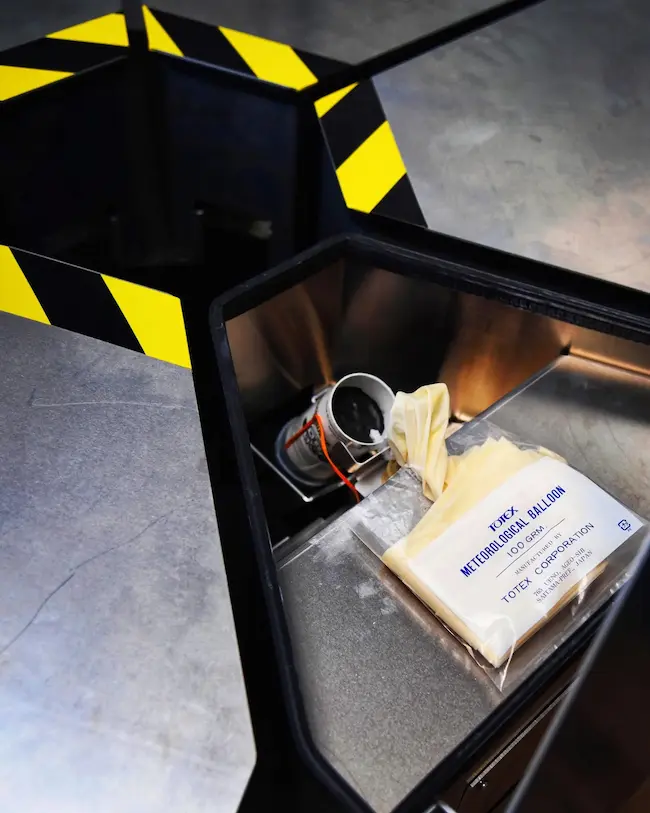
Fog is a layer of tiny water droplets suspended near the ground, dense enough to cut visibility to less than one kilometer. Cloud seeding by SELERYS disperses fog by introducing a seeding agent into that layer: it alters the droplets’ microphysical properties so they grow and stick together until they fall out of suspension instead of hanging in the air.
The choice of seeding agent is also important:
- Cold, supercooled fog (the kind found at higher altitude or in freezing conditions) responds to a glaciogenic agent like silver iodide. This method was already well established by 1977.
- Warm fog — the type most common at low-altitude airports, coastal ports, and in valleys — has no supercooled water to freeze. Instead, it requires a hygroscopic agent, a salt-based compound that draws in water droplets and makes them grow. LAICO’s balloons and drones can carry either agent type, depending on the characteristics of the site needing cloud seeding.
Balloon or drone for fog dispersion?
During a fog dispersal mission, a LAICO drone or balloon releases its agent near the ground, where the fog layer is located, rather than climbing toward a cloud cell as it does for hail or rain missions.
The drone or balloon reports real-time atmospheric data back to CIRRUS software throughout the operation. This allows dynamic adjustments to the agent dose or target zone as ground visibility changes. In addition, SELERYS cloud-seeding drones and balloons are an environmentally friendly option that keeps the operation’s ecological footprint small.
LAICO Smart Drones can seed wide fog formations with unparalleled precision. Equipped with GPS and weather sensors, each drone navigates to its section of the fog layer and holds position, working alongside the balloon network where needed.
How SELERYS compares to traditional fog dispersal methods
| Method | Fog Type | Key Limitation |
|---|---|---|
| Ground-based flare lines (historic FIDO-style burners) | Warm fog only | Needs a burner line the length of the runway and a constant fuel supply |
| Aircraft-dispersed dry ice or silver iodide | Cold, supercooled fog only | Often grounded by the exact low-visibility conditions it's meant to clear |
| Static ground-based hygroscopic seeding | Warm fog only | Fixed coverage area, no real-time adjustment as the fog bank shifts |
| LAICO Smart Drone | Warm and cold fog | Needs a licensed operator and flight clearance before each mission |
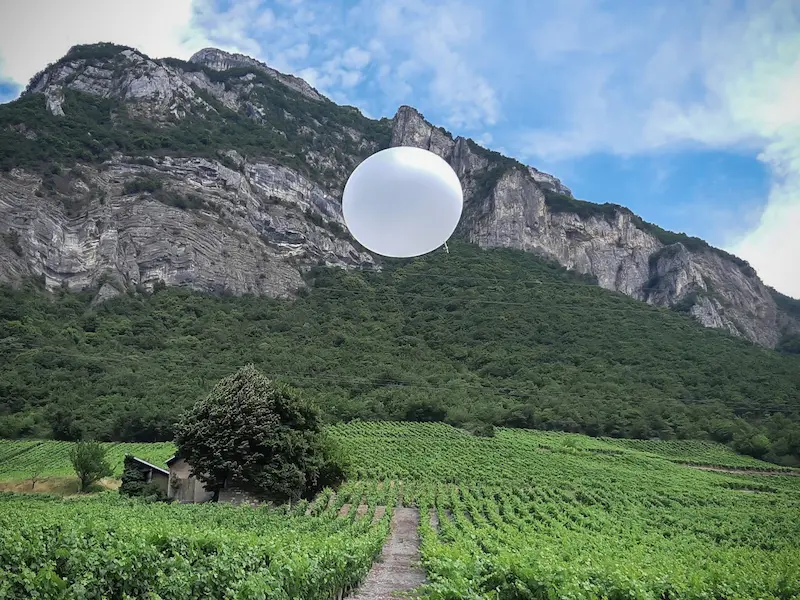
| LAICO SOBLI Balloon | Warm and cold fog | Releases straight into the fog layer at ground level; no pilot or launch clearance required |
Frequently asked questions
What is fog dispersion, and how does SELERYS's technology clear it?
Fog dispersion (or fog dispersal) breaks up a layer of suspended water droplets by seeding it with an agent (silver iodide or hygroscopic salt). The agent makes droplets grow, clump together, and fall to the ground as rain instead of staying suspended. SELERYS delivers the agent with LAICO Smart Balloons or LAICO Smart Drones, releasing it directly into the fog layer at low altitude and tracks the operation in real time through the CIRRUS software.
Which sites and industries benefit most from fog dispersion?
Airports are a key use case for fog dispersal, since low visibility slows taxiing, causes flight delays, and can even lead to accidents before a runway has to be closed. Fog dispersion is also used in maritime ports, road corridors, mining operations, and construction or energy sites (where fog means lost hours and added risk), as well as any remote infrastructure sites — such as telecom — that rely on drone-based inspection.
Cloud seeding balloons or drones: which is better for fog dispersion?
For fog dispersion, LAICO Smart Drones stand out as a very efficient and agile solution. Operating in coordinated fleets, GPS-guided drones dynamically adapt to the fog layer’s depth and drift, delivering the seeding agent with surgical precision right where it is needed most. Complementing this capability, LAICO Smart Balloons offer a proven, fully automated solution for localized point defense (such as critical installations), providing continuous baseline monitoring and direct data integration with the CIRRUS platform.
Does SELERYS use different fog dispersal methods for warm fog and cold fog?
Yes. Cold, supercooled fog responds to a glaciogenic agent like silver iodide, which provides an ice nucleus onto which droplets can freeze. By contrast, warm fog — the type most airports and coastal or valley sites usually deal with — has no supercooled water to freeze, so it needs a hygroscopic, salt-based agent instead. LAICO’s balloons and drones can carry both types of chemical agent.
How does SELERYS measure whether a fog dispersion program worked?
Each program is measured against real visibility readings taken on-site before and after a round of cloud seeding.
Can a client that is already running a SELERYS hail, rain, or snow program add fog dispersion too?
Yes. Fog dispersion relies on the same LAICO balloon and drone network and the same CIRRUS software as SELERYS‘s other cloud seeding programs, so a client with an existing installation can extend it to fog dispersion without new launch infrastructure.
get in touch with our team
and find the best response to your needs