
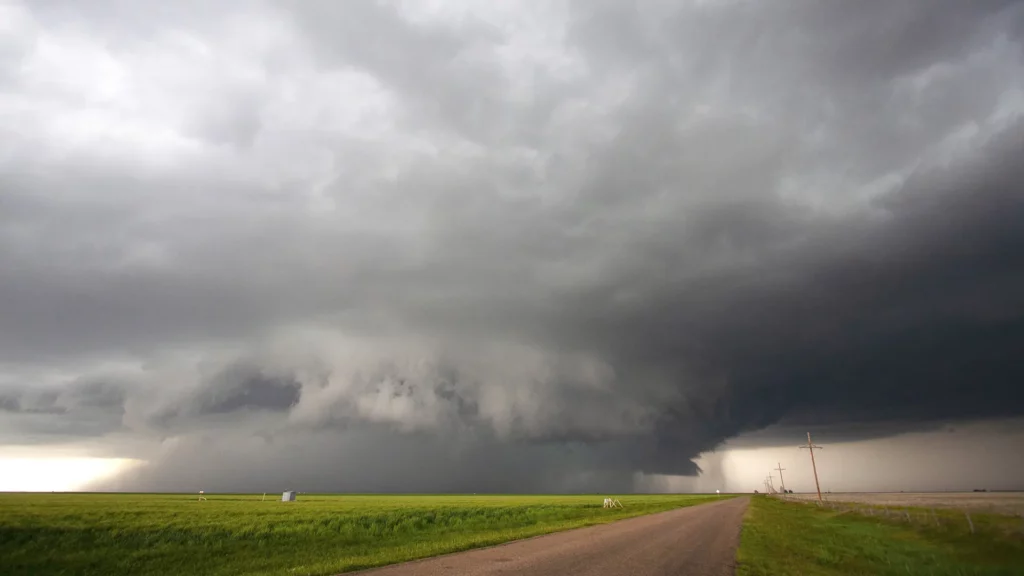
Radar, lightning detection, and automated alerts in one system
Storm early warning from SELERYS gives a site up to 60 minutes to act before lightning, torrential rain, hail, or slippery ground put people and property at risk. Three systems work together: the SKYDETECT radar, the EVEARLYS interferometer, and the CIRRUS software, which brings their data into one dashboard with automated alerts.
How storm early warning works:
- Storm anticipation: the SKYDETECT X-band radar scans the sky within a 30 km radius and spots storm cells as they form
- Interferometry: EVEARLYS, the only industrial VHF/UHF interferometer on the market, detects over 99% of total lightning activity and measures a cell's electrical buildup
- CIRRUS software: one dashboard that anticipates risks up to 60 minutes ahead and forecasts cloud motion 10 to 20 minutes ahead
- Alerts: SMS, email, or voice call as soon as a storm cell crosses a set threshold
- Deployment: SKYDETECT and EVEARLYS install in a single day, and a mobile trailer covers urgent or temporary needs
Key use cases for storm early warning
- Airports and space launch sites: warnings give ground crews time to postpone runway operations or hold a launch countdown.
- Construction sites: the lead time lets crews secure the site and clear exposed areas before the storm arrives.
- Energy sites: solar farms and substations depend on early warning, because a single lightning strike can mean hours of downtime and a hailstorm can destroy panels in minutes.
- Mining sites: open-pit operators can stop heavy haulage and move equipment off unpaved tracks before sudden downpours make the ground unstable and slippery, and outdoor crews can take shelter from lightning.
- Agriculture: one violent storm can wipe out a season’s harvest, so vineyard and orchard growers need the extra time to act and save their plots.
- Urban infrastructure and transportation: operators can adjust service schedules or secure equipment before the storm hits.
- Cloud seeding programs: SELERYS’s own LAICO balloon and drone teams rely on EVEARLYS and SKYDETECT to choose the right moment to launch a seeding mission.
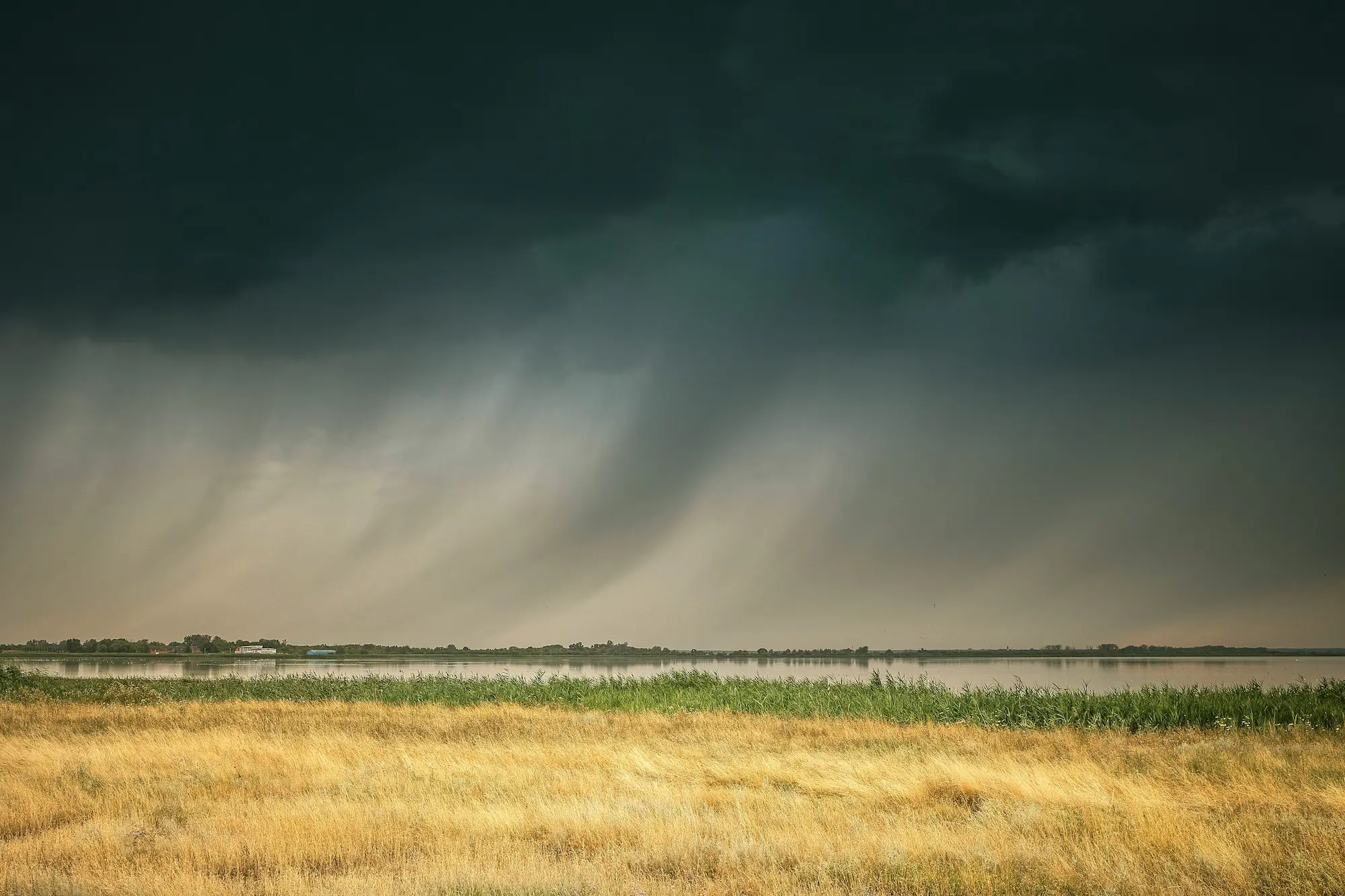
SKYDETECT and EVEARLYS combined
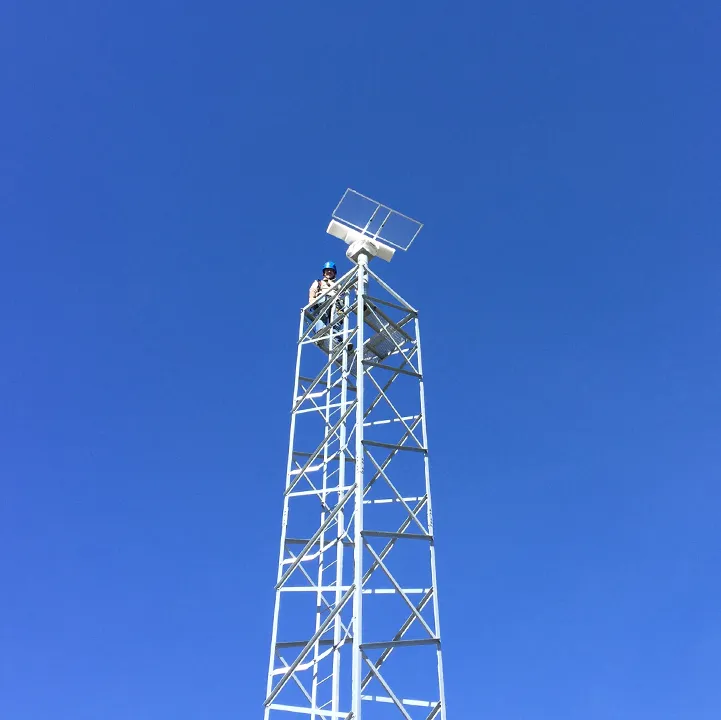
SKYDETECT is a short-range X-band radar designed by SELERYS that scans the half-sphere of sky above a site in high definition every minute. First deployed in 2006, it draws on a proprietary database of 20 years of storm history to isolate threatening cells and issue accurate warnings early.
Together, SKYDETECT and EVEARLYS give a complete diagnosis of a storm cell through dual-sensor coupling of an X-band radar and an interferometer, an exclusive innovation patented by SELERYS. The radar detects a forming cell, while the interferometer analyzes its electrical activity to measure how mature it is. The tracking relies on VHF/UHF interferometry, which compares when a lightning signal reaches each antenna panel to locate where the discharge started inside the cloud.
Across its coverage area, EVEARLYS picks up intra-cloud discharges and cloud-to-ground strikes alike, with 10,000 times more lightning emission sources than any other operational sensor. Site operators get more reaction time than detection based on rainfall alone can give them. Meteorological and space institutions such as NASA and EUMETSAT recognize VHF/UHF interferometry as one of the most robust techniques for detecting the electrical signals that precede a storm.
EVEARLYS has also worked side by side with research instruments. During the 2018 EXAEDRE campaign in Corsica, backed by France’s ANR and the HyMeX program, it tracked lightning flashes at the same time as SAETTA, a 3D lightning mapping array (LMA) operated by French laboratories. An LMA network is run only by research teams, whereas EVEARLYS is an industrial sensor that works on operational sites every day.
CIRRUS: a unified dashboard for weather missions
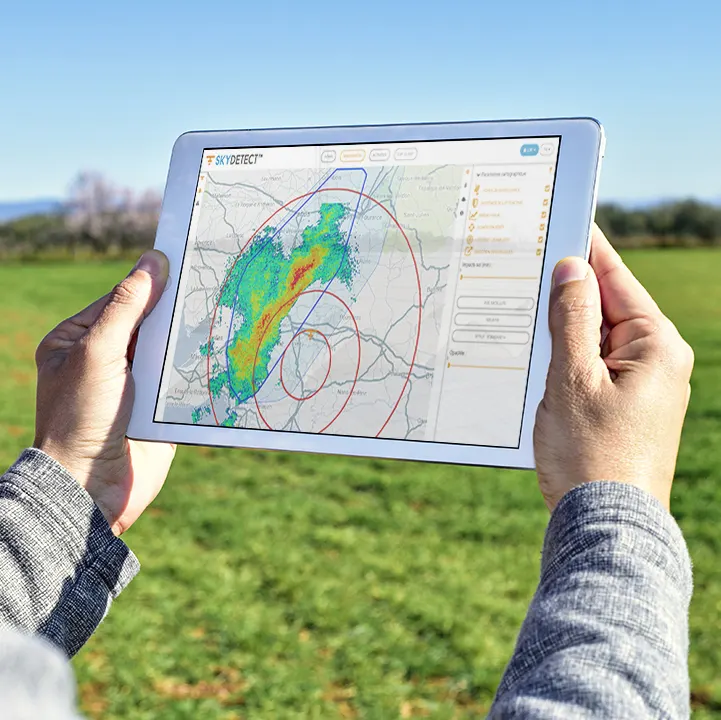
CIRRUS is SELERYS’s weather decision support software, designed to simplify weather-related decisions by bringing all the data into one easy-to-use platform. It centralizes SKYDETECT’s radar feed, EVEARLYS’s measurements of in-cloud electrical activity, third-party data, and telemetry from the LAICO balloons and drones.
The software supports multi-user management with role-based access for field crews, control-room operators, and management. Its automated alert module sends notifications by email, SMS, and voice message, and every alert and reading goes into a searchable activity history for reviewing past storm episodes. For partners already running cloud seeding operations with SELERYS’s LAICO balloons or drones, CIRRUS also works as the mission management center: it sends launch commands remotely and processes GPS positions and radiosounding data from the airborne units in real time.
The SELERYS storm early warning system at a glance
| System | What it does | Key capability |
|---|---|---|
| SKYDETECT | X-band radar watching the sky over a site to spot a developing storm cell | 30 km radius, installs in one day, mobile trailers available |
| EVEARLYS | VHF/UHF interferometer that reads a storm cell's lightning activity to judge its maturity | Detection rate above 99%, 10,000x more lightning sources than competing sensors |
| CIRRUS | Software that unifies both feeds plus the LAICO fleet into one alert dashboard | Risk anticipation up to 60 minutes, 10 to 20 minute cloud-motion forecast, automated SMS/email/phone alerts |
Frequently asked questions
What is storm early warning, and which systems does SELERYS use for it?
Storm early warning is the detection and alerting part of SELERYS’s weather risk management infrastructure. It relies on three systems: 1) SKYDETECT, an X-band radar that identifies developing storm cells; 2) EVEARLYS, a VHF/UHF interferometer that measures the overall electrical activity of cloud cells; and 3) CIRRUS, the software that combines the radar and interferometer feeds on a single alert dashboard.
Does EVEARLYS detect a storm before or after SKYDETECT?
Neither, because the two installations work simultaneously. SKYDETECT isolates a storm cell as it develops, while EVEARLYS quantifies the cell’s electrical activity, which shows how severe the lightning risk is and how the storm is evolving.
How much lightning activity does EVEARLYS detect?
More than 99% of all lightning in its coverage area, whether intra-cloud, cloud-to-cloud, or cloud-to-ground, and it resolves ten thousand times as many individual emission sources as competing sensors. NASA and EUMETSAT are among the reference organizations that recognize interferometry, the technology behind this level of detection.
How fast does a storm alert reach the designated operator?
CIRRUS sends an automatic alert the moment a defined weather threshold is crossed, reaching the person in charge even outside the control room. The system can also be monitored remotely from a smartphone, tablet, or computer.
How long does it take to install a storm early warning system?
SELERYS installs a SKYDETECT radar and an EVEARLYS interferometer on an existing building or tower in one day. Sites that need urgent coverage can use a mobile trailer with a mast-mounted radar.
Can a client already using SELERYS's cloud seeding, hail risk mitigation, or rain and snow enhancement programs add storm early warning?
Yes. CIRRUS is already central to mission management for SELERYS’s fleet of LAICO balloons and drones, where it handles remote launch commands and live GPS and radiosounding data. A site with an existing cloud seeding installation can bring storm early warning into the same software environment.
Which sectors can use SELERYS's storm early warning systems?
Airports and rocket launch sites, mining, construction and public works, energy (especially solar plants and substations), agriculture, transportation networks and urban infrastructure, as well as SELERYS’s own cloud seeding programs, all rely on the early warnings delivered by CIRRUS.
get in touch with our team
and find the best response to your weather modification needs