

SELERYS's cloud seeding tools combine CIRRUS, the software that identifies seedable clouds, with LAICO, the smart balloons and drones that deliver the seeding agent.
SELERYS’s cloud seeding tools can be divided into two categories: software (CIRRUS) that identifies which clouds are good candidates for seeding, and LAICO smart vectors (balloons and drones) that deliver the seeding agent, hygroscopic salt or silver iodide, into the cloud.
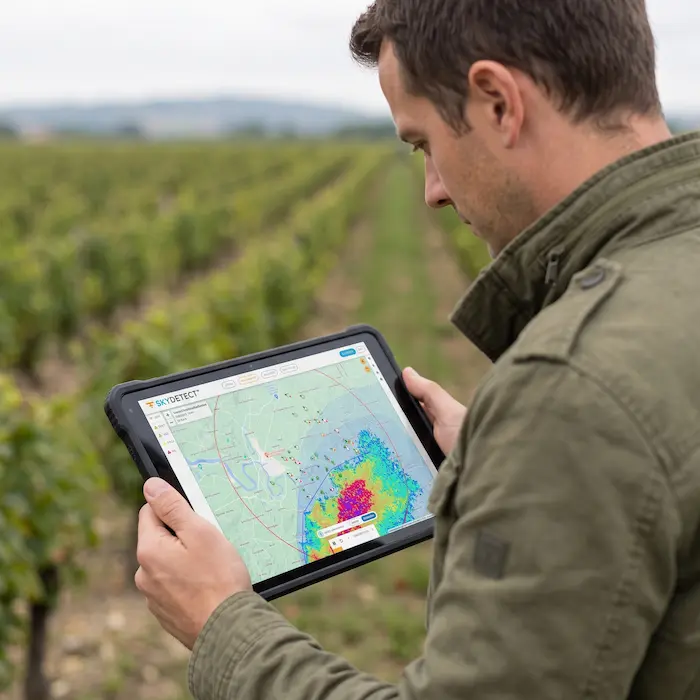
For results by application (hail mitigation, rain and snow enhancement, fog dispersal, and storm warning), see the Use Cases page. For the full product range, including SKYDETECT and EVEARLYS on the detection side, see Products.
SELERYS's cloud seeding tools at a glance:
- CIRRUS software: scans the sky in HD, scores each cloud against SELERYS's own seedability model, and remotely commands every balloon and drone launch
- LAICO smart balloons: launch under a permanent civil aviation clearance, suited to a target area that needs the same coverage season after season
- LAICO cloud seeding drones: launch under a per-flight clearance, redeployed wherever a target moves or a stable system spans several cloud cells
Cloud Seeding Software: CIRRUS
Before a LAICO cloud-seeding balloon or cloud-seeding drone ever launches, CIRRUS software has already been watching the sky through SELERYS‘ dedicated sensors. It scans a full half-sphere in HD every minute, checking each cloud cell against SELERYS‘s seedability model to identify the best candidates for seeding.
Once CIRRUS confirms a suitable cloud cell, it displays its nowcast motion, projecting where it will be in the next 10 to 20 minutes to inform launch decisions and flag likely updraft areas.
In-flight monitoring and recordkeeping
For the rest of the flight, CIRRUS analyzes the GPS and radiosounding data streaming back from the LAICO vector in real time. If a chosen cloud-seeding opportunity threshold is crossed, CIRRUS sends an alert. SELERYS also logs every cloud activity and cloud-seeding session into a searchable archive and carefully tracks balloon/flare stock so a site never runs short of consumables without warning.
CIRRUS platform capabilities
- Multi-user access with role-based permissions
- One centralized dashboard for all cloud-seeding tools
- Real-time HD cloud-cell tracking, refreshed every minute
- Configurable alerts by SMS, email, or phone
- Remote command and control for balloon and drone launches
- A searchable archive that replays past cloud motion and flight paths
Smart Balloons for Cloud Seeding
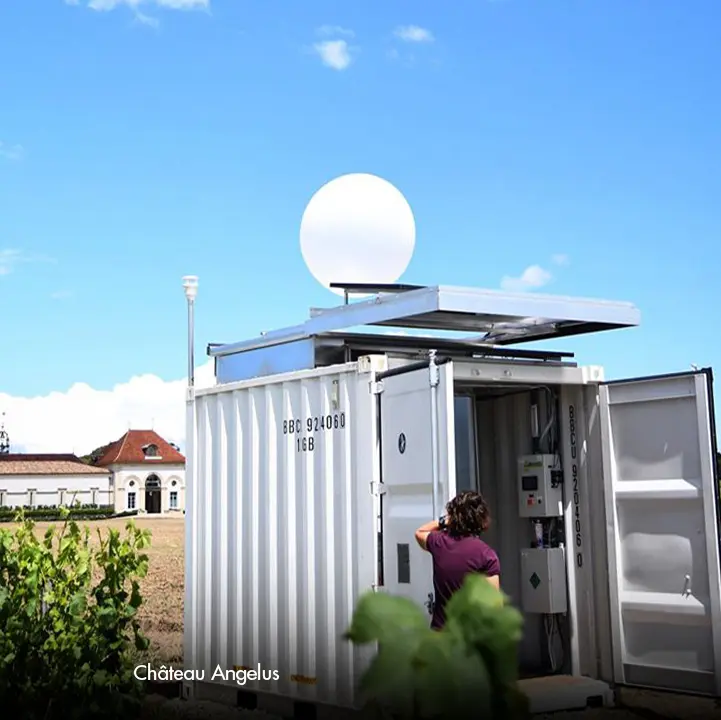
LAICO smart cloud seeding balloons can be launched on remote command, without the need for a pilot or pre-flight authorization. Thanks to its patented design, SELERYS‘s balloon technology has its own permanent operational clearance with civil aviation authorities, making balloons the most practical choice for a target area that needs the same patch of sky covered again and again, season after season.
Because a balloon reaches altitude on helium rather than burning fuel, it also costs less to operate at scale. It leaves a smaller footprint than fuel-burning alternatives such as aircraft or ground-based rockets.
Precisely timed agent release
After launch, the balloon doesn’t release its agent immediately. Instead, it climbs on GPS guidance toward a specific weather situation and rule of engagement, continuously reporting live atmospheric readings, and its hygroscopic salt or silver iodide flare ignites only once the balloon reaches that target, several minutes into the flight.
Cloud Seeding Drones
Unlike a balloon, a LAICO cloud seeding drone needs a licensed operator to obtain clearance for each flight. After that, a drone can be airborne within 5 to 15 minutes. A drone’s advantage over a balloon is that it can carry multiple flares and follow a predefined route thanks to SELERYS‘s Mission Manager.
CIRRUS takes over once a drone flight is cleared
Once the flight is approved, CIRRUS automates launch-pad selection, flight planning, and seeding-agent release, keeping the 15-minute launch window realistic even when several cloud cells need attention during the same mission.
SELERYS‘s technology allows drone swarm management: multiple drones can work a cloud system together, splitting the area between them for more complete coverage than a single drone provides alone. That scalability means the same platform can run a single drone for a small, contained event or field a full swarm for wide-area coverage, without changing hardware.
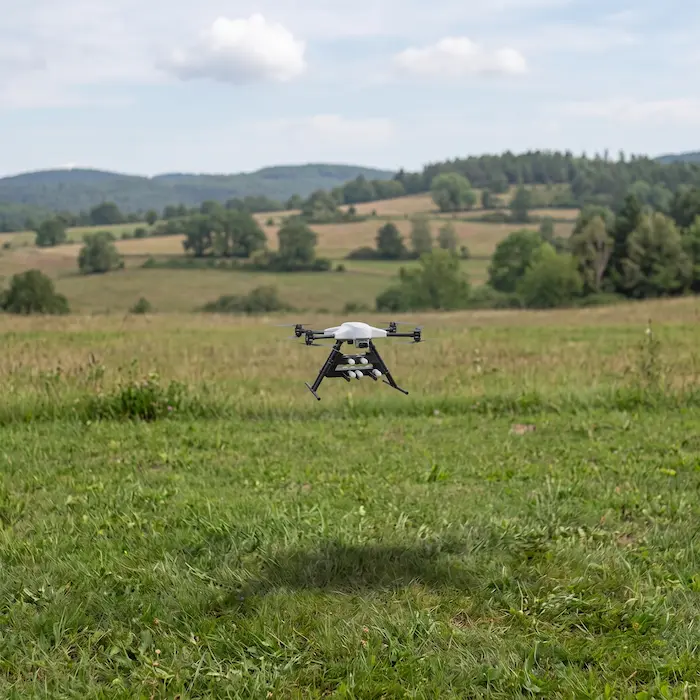
Choosing the Right Cloud Seeding Tools for a Mission
| Condition | Smart Balloons | Smart Drones |
|---|---|---|
| Turbulence | Operates normally | Grounded |
| Icing | Operates normally | Grounded |
| Night operations | Operates normally | Not used |
| Direct cloud entry (cumulonimbus) | Yes | No |
| Mountainous terrain | Yes | Limited |
| Coverage style | Networked, large-area | Targeted, localized |
| Wind resistance | No stated ceiling in current data | Up to 15 m/s |
| Pilot or flight authorization required | No | Yes |
| Typical reaction time | Under 5 minutes | Under 15 minutes |
SELERYS typically pairs a fixed balloon launch site with smart drones held in reserve. If the balloon’s position can’t reach a target, a drone covers it instead.
Frequently Asked Questions
What cloud seeding tools does SELERYS use in the field?
We use CIRRUS software and LAICO cloud seeding balloons and drones. Our balloon technology holds three international patents, and we’ve deployed more than 1,000 systems worldwide.
What is the role of CIRRUS software once a drone is airborne?
Under the direction of a specially designated Mission Manager, CIRRUS takes remote control of whichever drone platform is deployed, be it fixed-wing, rotary-wing, VTOL, or multicopter.
Why can a LAICO cloud-seeding balloon still launch when weather grounds a drone?
A LAICO balloon flies on GPS and radiosounding guidance, with its flare set to ignite automatically once it reaches a pre-programmed target — no live visual monitoring or manual go/no-go call needed mid-flight. That autonomy is what lets it keep flying in weather that would ground a drone. A single station can also pre-load up to 24 balloons, with as many as six launched at once for the same event.
What kind of drone does SELERYS use?
We use whichever platform suits the mission, most often rotary-wing or multi-copter models, which hover at an optimal seeding speed of 5 m/s and hold steady in wind up to 15 m/s.
How much seeding agent does a single LAICO balloon carry?
Each cloud-seeding balloon carries up to 500g of silver iodide or hygroscopic salt flares, covering an area equivalent to about three football stadiums, at roughly 18 times the efficiency of a ground-based burner and two to four times that of a traditional anti-hail rocket.
Is SELERYS the only provider that operates both balloon and drone cloud seeding?
Yes. SELERYS is the only provider operating an integrated platform that combines balloon and drone cloud seeding with full cloud monitoring in a single turnkey system.
get in touch with our team
and find the best response to your needs